

Freedom of speech
We would ensure the right to reasonably criticise:
- The Australian and other governments.
- Companies and organisations.
- Wealthy individuals and politicians.
- The conduct of religious organisations.
However, this criticism:
- Should be based on reasonable evidence considering the resources of the defendant.
- Should not include abuse or harassment.
- Should not be of key historical religious figures that are now dead.
- Should not be related to an attribute of the person such as race, gender, sexual orientation, disability, etc.
Flexible working hours
See Flexiweek
Curtailing defamation
Defamation actions are frequently used by the rich and powerful to silence legitimate and truthful criticism.
We would cap the total payout including costs for defamation to something like:
- $1,000 for individuals and non-profit groups
- $10,000 for businesses and wealthy individuals
- $100,000 for listed companies
These payouts should only be for actual proven financial loss by the plaintiff and should NOT include nebulous claims of reputational damage, hurt feelings and loss of community standing, etc.
Existing defence options should also be strengthened and the Voller Decision that made businesses liable for defamation by third party on-line comments should be overridden.
Voting reform
We support:
- Extending the right to vote for students that are 16 and older.
- Removing fines for not voting for under 18’s and for over 60’s.
- Each party being allowed ONE A4 how-to-vote card per booth. The AEC would randomly attach these to each booth. No how-to-vote cards to be handed out ending the harassment of voters.
Defending democracy
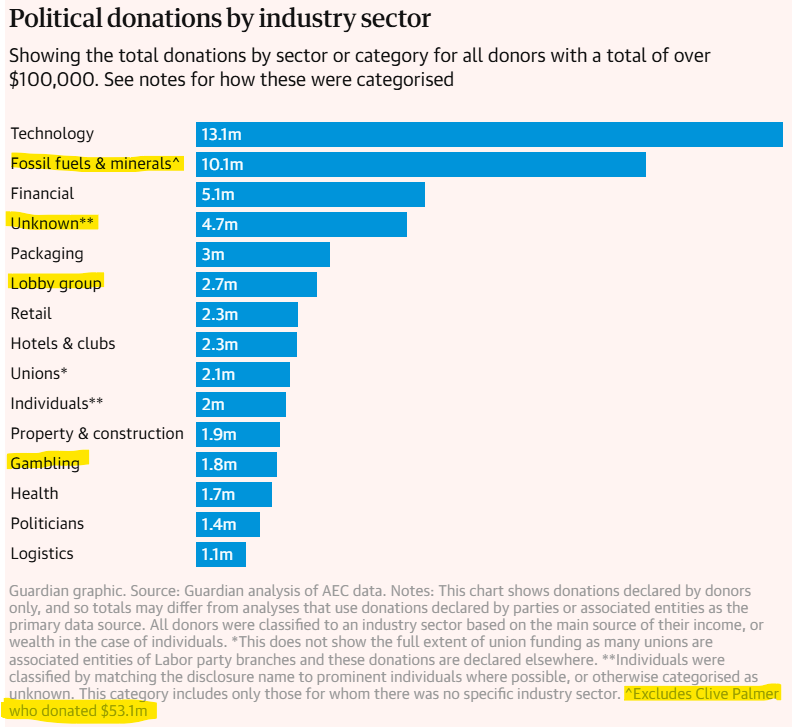
Politics everywhere is corrupted by secret donations from the rich and powerful to push their own interests.
- We would remove tax deductibility for all donations to all political parties.
- This would reduce vote-buying by major companies and wealthy individuals. (Donors gave $131m before Australia’s 2025 election. Here’s who they are)
- The AEC should produce and distribute an election guidebook with the policies of the candidates for each electorate. Each candidate could submit one A4 page that only refers to their solutions. Two extra pages to be added by the governing party. This reduces the influence of big-money on elections. Each candidate could only say what their policies were – not just critisize other candidates or parties.
- All donations to political parties must flow via the AEC from the actual Australian tax payer, registered trade unions or Australian listed companies. Donations cannot come from dark-money slush funds, lobby groups or overseas entities. All donations to be published in real time by the AEC.
- All election spending by political parties must be reported to the AEC for reporting in real time and cannot exceed official donations.