
More oil for Australia
It has been suggested that Australia could supply it’s own oil.
This would involve the government spending many billions to subsidise:
- Fracking marginal oil reserves using toxic chemicals and vast amounts of water.
- Drilling for oil off-shore in areas that frequently experience extreme weather, such as the Great Australian Bight.
- Converting coal to oil, generating huge amounts of pollution.
- Greatly increasing the amount of farmland devoted to ethanol-producing crops.
- Building oil refineries to mix whatever light oil fractions the above yields with imported oil to create fuel products for the Australian market.
None of this is economically viable which is why past Coalition Governments (Fraser, Howard, Abbott, Turnbull, Morrison) have never attempted it while in office.
Geoscience Australia estimates our proven reserves would supply us for only 7 months, after which all the above investment would be useless.
All of these assets would also be hopelessly vulnerable to any adversary in a conflict.
Oil imports are a huge vulnerability
Australia only has 30 to 40 days of liquid fuel in the country.
This is a critical vulnerability that would be exploited by a superpower adversary. It will be a massive problem during the future wars in the Middle East and Asia.
Australia cannot keep relying on liquid fuel from overseas war zones.
Electrification is the solution
Electricity is manufactured in Australia.
For military (and other) reasons Australia needs to transition to electric power for as many vehicles as soon as possible.
More places to charge EV’s
We would ensure an adequate ratio of fast DC chargers to petrol bowsers at all petrol stations.
We would facilitate adding new fast charging facilities at regional ‘destinations’ like country towns, national parks and beaches.
Car spaces for all new dwellings should also have at least 15 amp sockets for charging. This shouldn’t cost much more than a regular power point to install at construction time.
Less tax on EV’s
We would have less tax on EV’s or hybrids with over 200km of all-electric range.
Hybrid and electric trucks
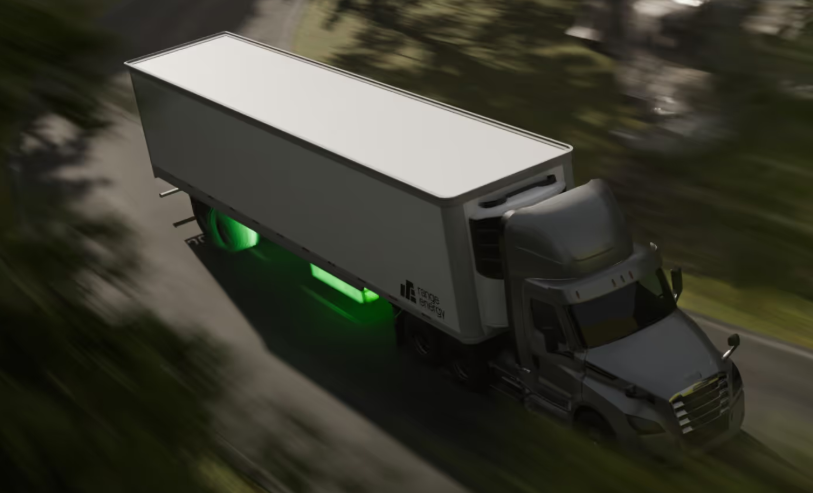
We propose redirecting the $10 billion diesel fuel subsidy to support electrification of the heavy vehicles including trucks & tractors.
This could include:
- Hybrid trucks
- Electric trucks
- Hybrid trailers (See https://www.range.energy/)
- Hybrid or electric farm equipment
This would allow transport and farming to continue to some extent when diesel supply to Australia was severely restricted by a blockade or wars elsewhere.
Electric farming
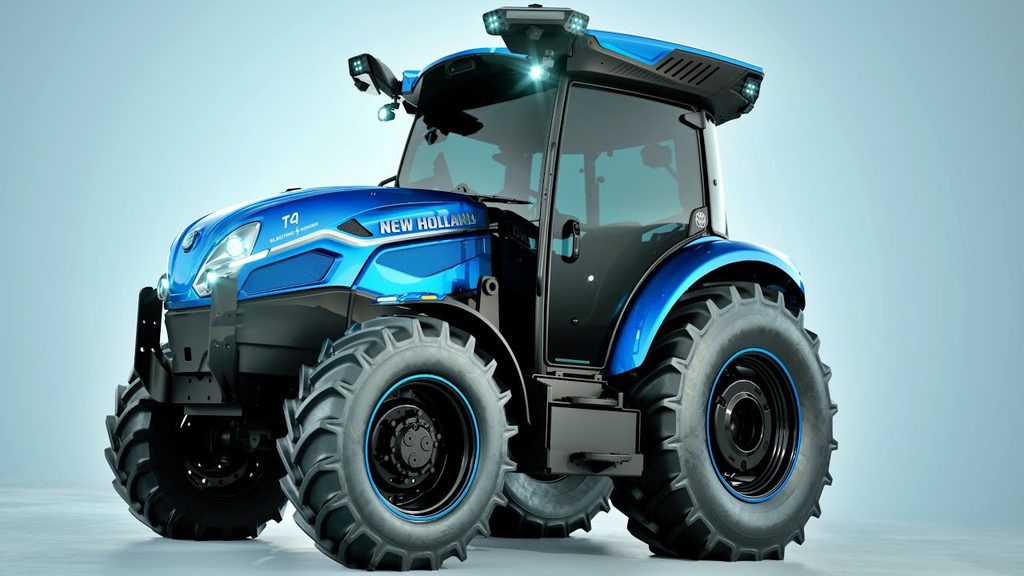
Electric tractors are now available – we would strongly support there adoption for food production by redirecting the current diesel fuel subsidies.
Electric Transport
Interstate Freight
We would favour rail freight enhancements over further road improvements. This is to help reduce reliance on imported fuels.
Electric Buses
These are here now and offer a far superior ride quality to old diesel buses.
No diesel buses should be purchased from now on.
Monorails – beating the gridlock on the ground
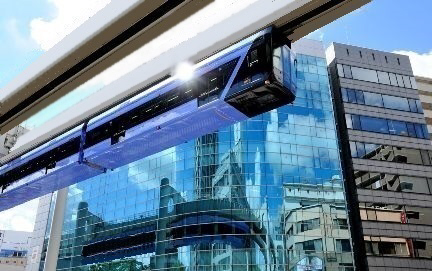
Many areas are not suitable for high-density housing because there is no mass transit connection.
Existing rail transport networks are already overloaded and cannot be extended for less than $1 billion per kilometre. Melbourne Metro has cost $1.6 billion per kilometre.
At the same time the road network is frequently in gridlock limiting the ability to add more tram and bus transit.
We propose funding the addition of a layer of elevated mass transit to service new apartment complexes. These would link the new housing to existing heavy rail hubs and the CBD. See Monorails for Australia Cities.
Maglev for Interstate Transport
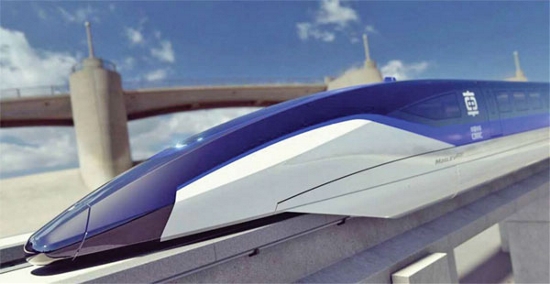
Fast rail needs to operate well over 300 km/h to cover our inter-city distances.
These speed cannot be achieved on conventional steel-rail track at ground level with all the level crossings, tight corners and steep grades. Existing steel track in the cities is already full of commuter trains.
The only solution is to use mostly elevated track and that may as well be maglev as old technology.