
Our plan
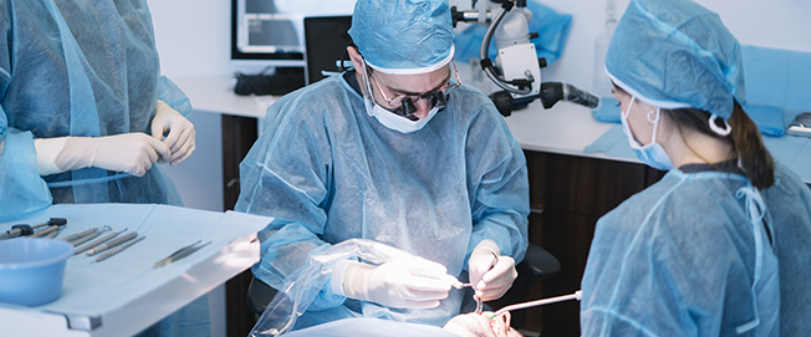
- Add essential dental care to Medicare
- Add ambulance cover to Medicare
- Increase public health funding to reduce wait times
- Cut specialist fees
- More public aged care centres
- Fund aged care centres to take over care for elderly “bed blocker” patients and so reduce the load on public hospitals.
Adding Dental to Medicare
This would cover most types of fillings and crowns but exclude most cosmetic work.
Poor dental health causes many other health problems.
Adding ambulance to Medicare
This would mean Australians would not need to remember to pay ambulance membership fees as this would be covered automatically.
Cutting Specialist Fees
High fees for specialists has become a major problem.
One option might be to provide free staffed consulting rooms for specialists who are prepared to bulk bill their services. Forgiving student debt for these specialists could also be considered.
The Government would pay for the rooms, IT, reception staff and possibly nurses.
Public aged care
Private aged care is too expensive. We would fund more basic public palliative aged care facilities for those who cannot afford private nursing home care.
This could be funded by securing a gradually increasing percentage of the patient’s home, if they have one.
Bed-blockers to aged care
We would fund more advanced care in aged care facilities.
This would allow more care of elderly patients in nursing homes instead of public hospitals. Ambulances would take elderly patients to nursing homes instead of public hospitals where feasible.
Aged care nursing staff would need to be empowered to provide more advanced care to patients with review by doctors at a later stage. This would focus on typical geriatric issues such as UTI’s and similar.
The aged care facilities would need to be networked with each other, public hospitals and health centres to allow staff to back each other up.
Patients could still be evacuated to hospital if required.
Violent patient centres at Public Hospitals
We would fund separate facilities to handle violent and drug-effected patients to reduce risks to staff and the general public.
Public vs. Private
For health, public is more equitable, efficient and effective.
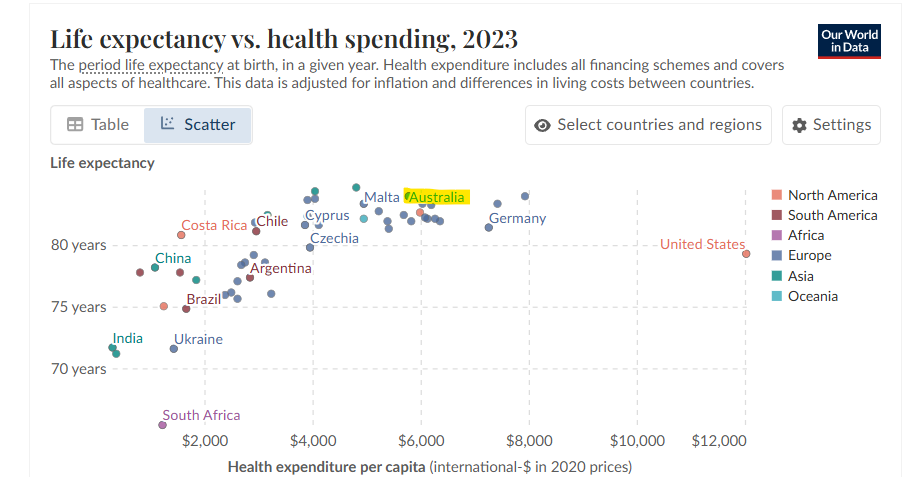
The more that citizens have to rely on private health providers the greater the overall cost burden to the nation. The USA is an extreme example of this, with the smallest public health sector in the OECD and the highest cost health care.
NDIS
We will wait to see how the 2026 reforms impact disabled citizens and reduce rampant fraud.
Spending on the NDIS should remain at a steady state relative to the size of the overall budget.
- Some services provided via NDIS may be able to be moved to the PBS or Medicare. For example adding incontinence and other aids to the PBS.
- Federal or State governments may need to take over accommodation providers to improve services and avoid fraud.
- Some services may need to move to public sector providers.
Limits to Medicare
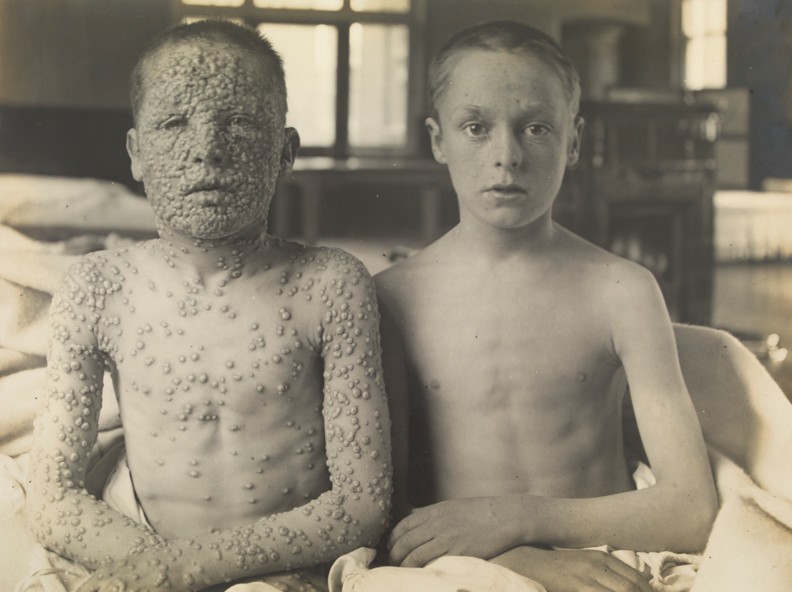
Citizens who deliberately ignore key health advise should not receive the full benefits of Medicare. This could include persons:
- Refusing key vaccinations and thereby risk spreading disease in the community. (Except for Conservative Zones)
- Continuing to smoke / vape
- Refusing mainstream scientific health advise and treatments and then demanding expensive medical treatments when that goes wrong.
- Live in a municipality that refuses to fluoridate the water supply.
Consideration would need to be given to persons with mental health issues who maybe unable to make healthy choices.
Discouraging junk food
We would tax retailers that stock junk ‘food’ products. This would be proportional to the retailer’s floor area.
Sugary soft drinks, cake and biscuits would be early targets.
This tax would be set at a level to deter sale of junk products rather than to raise revenue.
Funding
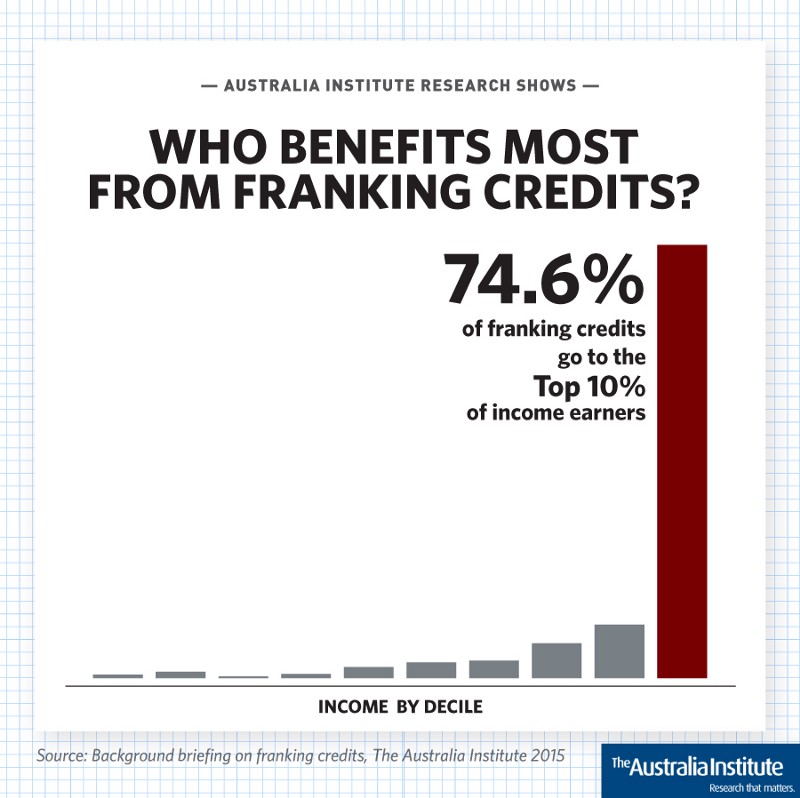
Stop refunding unused franking credits
This tax break primarily benefits the wealthy. It gives a cash windfall to wealthy shareholders and costs $4 to 6 billion / year (Australia Institute/ACOSS)
Abolish the private health insurance rebate
Instead of subsidising private health insurance we would directly fund public health.
Private health does not reduce wait times in public hospitals and is less efficient than just having a public system. (The Conversation)
The PHIR costs over $7 billion (The Conversation, 2022).
No Medicare levy surcharge
Currently this is levied on your income tax if you don’t have private health insurance.
This should be scrapped as many Australians may not need private health cover if Medicare included essential dental work.
Money saved from funding the private health insurance rebate can be re-directed to the public health system.
We would examine redirecting funding for the PHIR to directly boost Medicare services.